
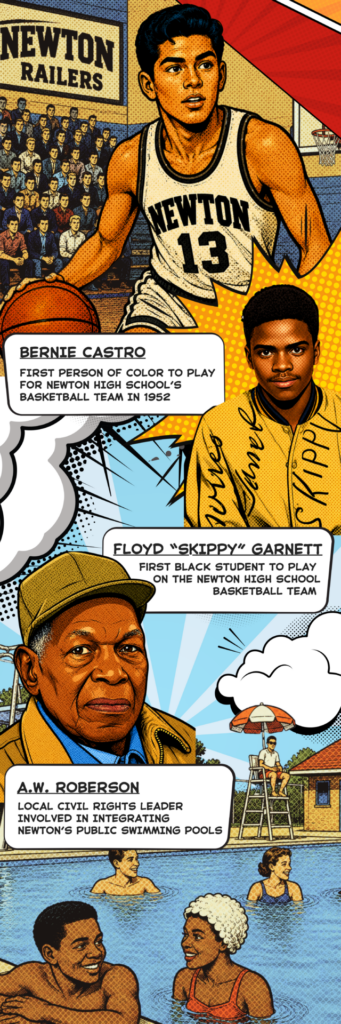
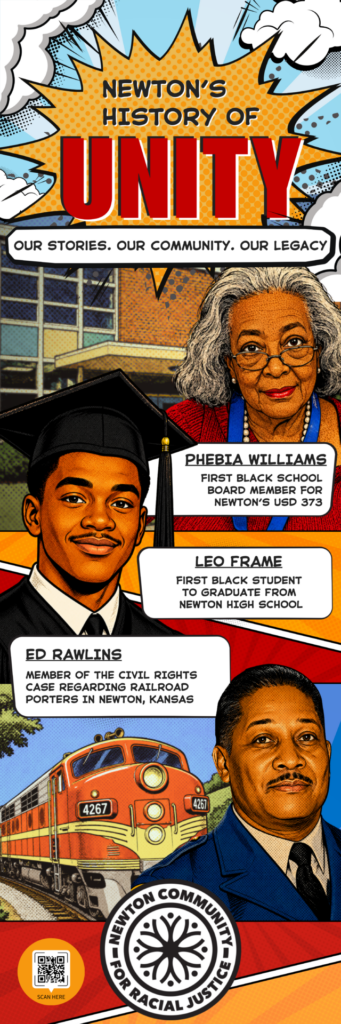
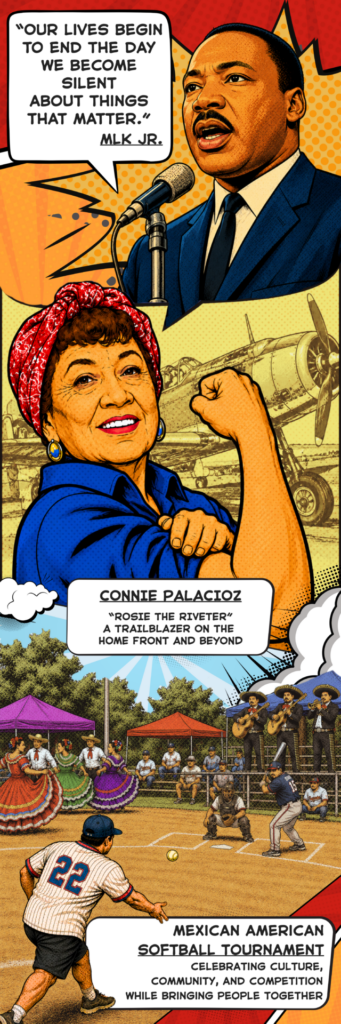
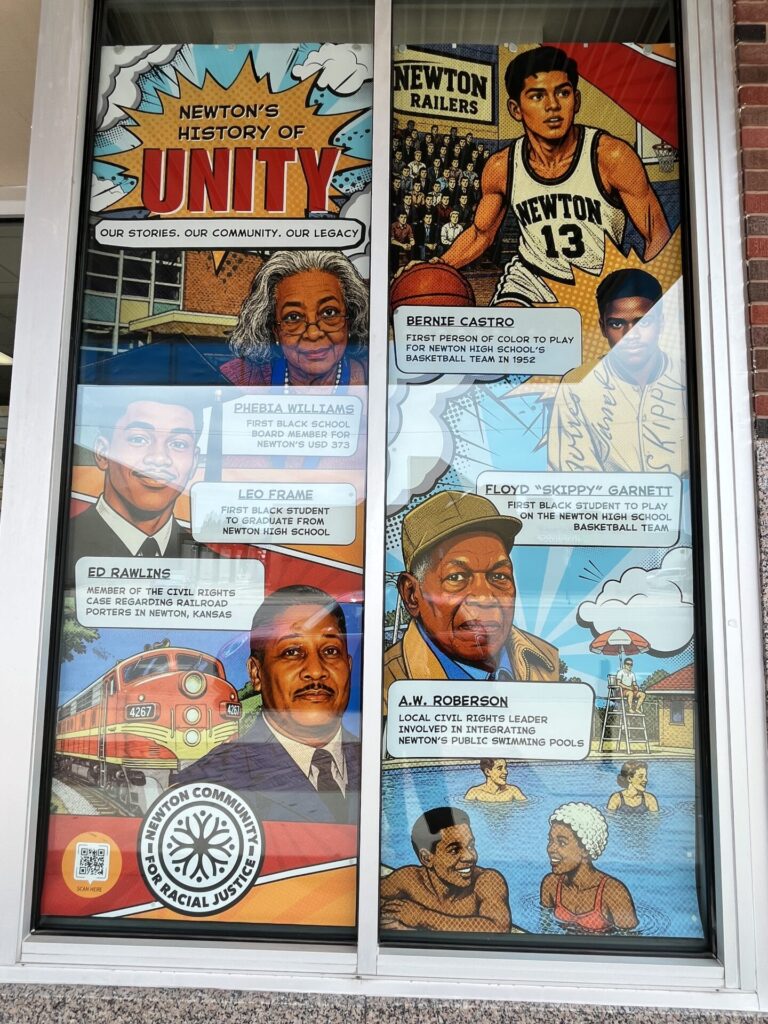
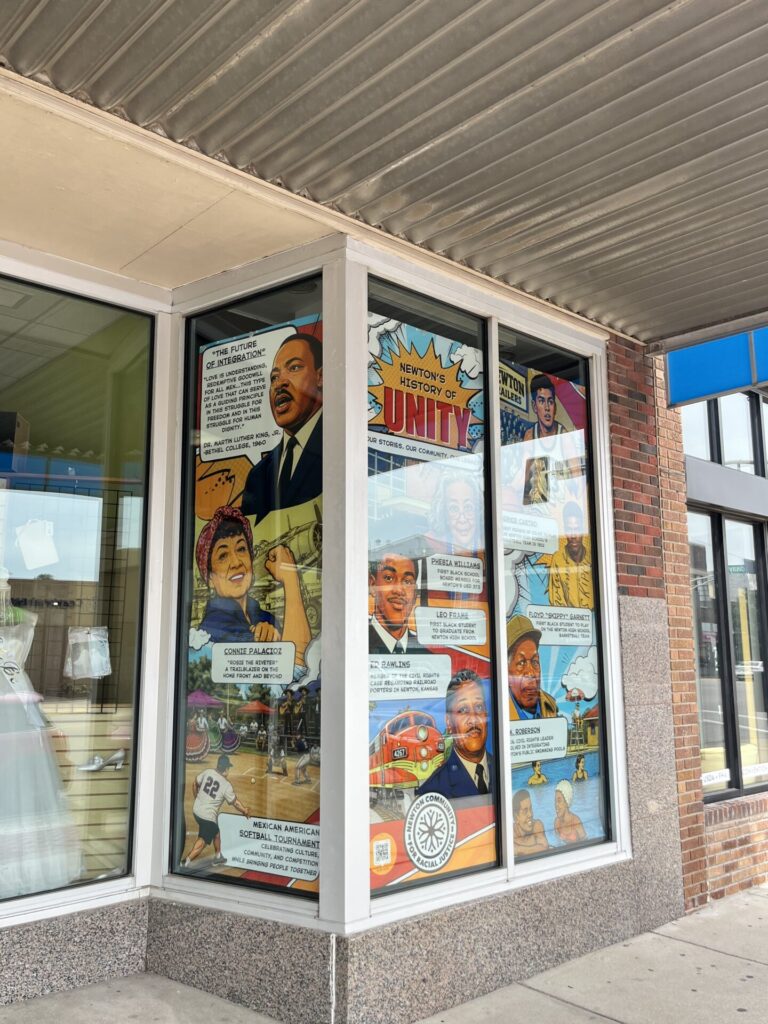
Those walking through downtown Newton this July may notice a new addition to the windows of the Et Cetera Shop. Bold portraits, comic book-inspired graphics, and familiar pieces of Newton history now fill the windows as part of a display created by the Newton Community for Racial Justice (NCRJ). The display catches the attention of motorists and pedestrians from across the street, while the smaller historical details encourage those walking by to stop, look closer, and learn something new.
That combination reflects an important purpose behind NCRJ’s project: local history belongs to all of us.
If you’re in downtown Newton this July, take a few minutes to stop by the Et Cetera Shop and see the display for yourself. Look closely at the faces. Read their stories. You may discover that some of Newton’s most important history happened closer to home than you realized.
Titled “Newton’s History of Unity,” the display invites the community to learn more about the people and events that helped shape Newton—particularly the stories of Black, Hispanic, and other minority community members whose contributions have not always received the recognition they deserve.
And among those prominently featured is someone very special to the Kansas Christian Home community: KCH resident Phebia Williams.
Celebrating the People Behind Newton’s History
The colorful pop-art display turns the Et Cetera Shop windows into a larger-than-life history lesson. Rather than focusing only on nationally recognized moments in the Civil Rights Movement, NCRJ brings the story home by highlighting the people who worked, learned, competed, served, and advocated right here in Newton.
The display features local pioneers including Leo Frame, the first Black student to graduate from Newton High School; Ed Rawlins, who was involved in a civil rights case concerning railroad porters in Newton; A.W. Roberson, a local civil rights leader involved in integrating Newton’s public swimming pools; and Newton High School basketball trailblazers Bernie Castro and Floyd “Skippy” Garnett.
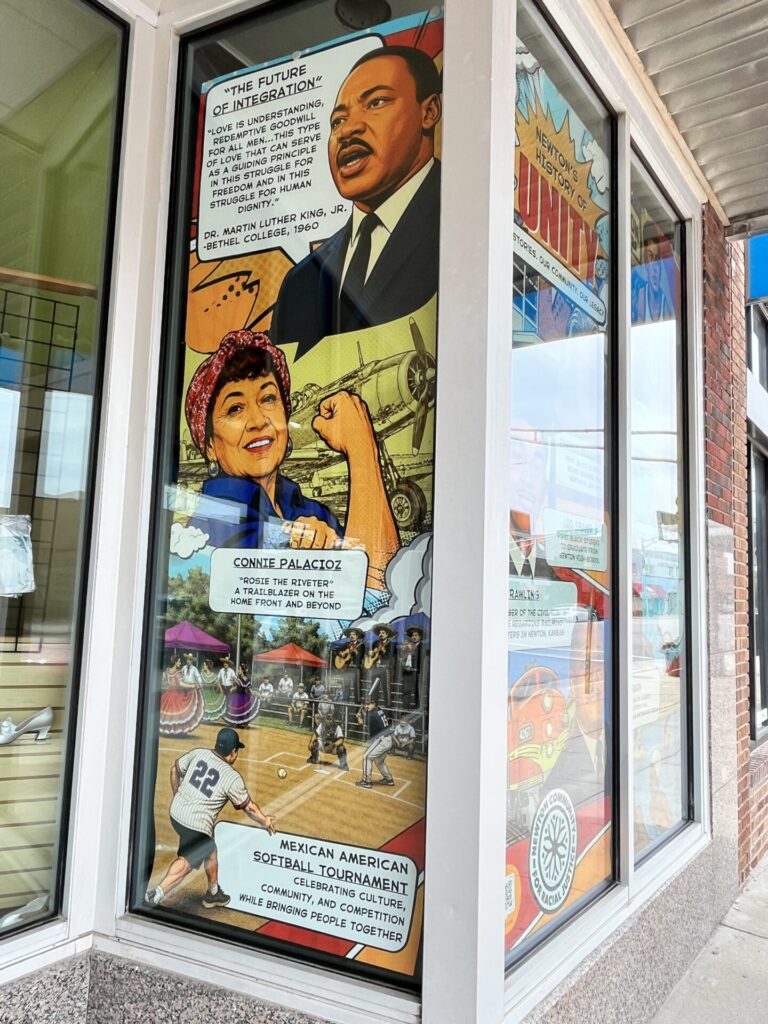
The display also celebrates Connie Palacioz, Newton’s own “Rosie the Riveter,” and the Mexican American Softball Tournament, recognizing the role culture, community, and friendly competition played in bringing Newton residents together.
Dr. Martin Luther King Jr. provides a connection between Newton’s local history and the broader Civil Rights Movement. The display recalls King’s 1960 visit to nearby Bethel College and incorporates his message about understanding, goodwill, freedom, and human dignity.
KCH Resident Phebia Williams Featured Among Newton’s Trailblazers
For Kansas Christian Home, one face in the display is especially meaningful.
Phebia Williams, a current KCH resident, is recognized as the first Black school board member for Newton’s USD 373.
Her portrait occupies a prominent place beneath the display’s central message: “Newton’s History of Unity — Our Stories. Our Community. Our Legacy.” Seeing Phebia’s image displayed on such a large scale in downtown Newton is a powerful reminder that history isn’t always something found in textbooks or belonging to generations long gone. Sometimes, the people who made history are still right here in our community.
Phebia’s service represents an important milestone in Newton’s educational and civic history. By stepping into a leadership position where Black voices had previously been absent, she became part of the ongoing work to make local institutions more representative of the community they serve.
At KCH, we have the privilege of knowing Phebia not simply as a name from Newton’s history, but as a neighbor and member of our own community.